|
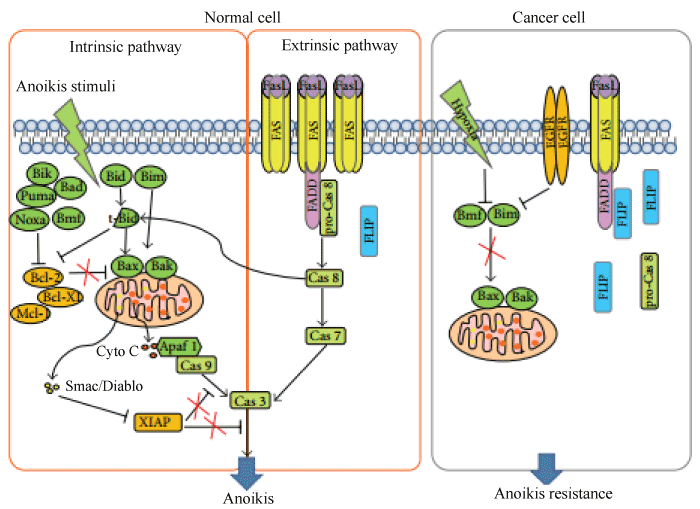
| Figure 3: The anoikis cascade and development of resistance. When detached from ECM, normal cells induce anoikis through both intrinsic and extrinsic pathways. Upon cell detachment, FAS and FasL are upregulated and FLIP is downregulated, resulting in the activation of Caspase 8. This is followed by activation of caspase-7 and caspase-3. Loss of cell adhesion also activates proapoptotic Bcl-2 proteins (Bik, Puma, Bad, Noxa, Bmf, Bid, Bim, Bax, and Bak) that inactivate antiapoptotic Bcl-2 proteins (Bcl-2, Bcl-xL, Mcl-1), thereby inducing mitochondrial membrane permeabilization through apparent Bax/Bak oligomerization. Such activity causes mitochondria to release cytochrome C, activating caspase-9 and subsequently caspase-3. Smac/DIABLO is released and inhibits XIAP (inhibitor of apoptosis) perpetuating caspase-3 activation. Once this occurs, anoikis is inevitable. However, increased FLIP expression in malignant cells inhibits the extrinsic pathway. Further, oncogene expression such as EGFR and hypoxia often seen in tumorigenic cells down regulate Bmf and Bim, inhibiting the mitochondrial pathway in suspended cells. In this regard, cells acquire anoikis resistance, substantially increasing the likelihood of anchorage independent growth. Image courtesy of [33]. |
