| Research Article |
Open Access |
|
| D. K. Chauhan1*, Vinita Puranik2 and G. K. Rai2 |
| 1Botany Department, University of Allahabad, Allahabad, Uttar Pradesh, India |
| 2Centre of Food Technology, University of Allahabad, Uttar Pradesh, India |
| *Corresponding author: |
Prof. D. K. Chauhan
Botany Department
University of Allahabad
Allahabad, Uttar Pradesh, India
E-mail: dkchauhanau@yahoo.com |
|
| Â |
| Received October 11, 2012; Published December 04, 2012 |
| Â |
| Citation:Chauhan DK, Puranik V, Rai GK (2012) Development of Functional Herbal RTS Beverage. 1:541 doi:10.4172/scientificreports.541 |
| Â |
| Copyright: © 2012 Chauhan DK, et al. This is an open-access article distributed under the terms of the Creative Commons Attribution License, which permits unrestricted use, distribution, and reproduction in any medium, provided the original author and source are credited. |
| Â |
| Abstract |
| Â |
| Herbal plants like Tinospora cordifolia and Ocimum (basil) possesses phytochemicals such as polyphenols, flavonoids and tannins which attribute to a strong free radical scavenging activity and these plant derived antioxidant nutraceuticals modulate many oxidative stress related degenerative diseases. Nutraceutical rich extracts of above herbs can be added in fresh juice of sweet orange for the preparation of refreshing, thirst quenching and energizing ready to serve drink that not only improves the health but also fulfills the nutritional requirements. The mausambi juice was analyzed for its physico-chemical composition, herbal extracts for % radical scavenging activity and different formulations of beverage were prepared by different proportions of orange juice, tinospora and basil extract. The prepared beverages were packed in glass bottle with cork cap and stored at room temperature for a period of 2 months. The products were analyzed for its keeping quality and acceptability at intervals of 10 days. The prepared beverages were evaluated by a taste-testing panel for sensory attributes. Herb mixed beverage having formulation 6% basil and 1.5% T.cordifolia was found to be optimum among the other formulation. The above optimized beverage can be stored effectively for two months. It is concluded that extracts of above herbs can be used as a valuable ingredient for the production of herbal beverage with all the important properties and medicinal characteristics of tinospora and basil herbs. This can thus prove to be a good health drink with phenolics and vitamin C as antioxidants. |
| Â |
| Keywords |
| Â |
| Nutraceutical; Ready to serve; Herbal extract; Orange juice; Sensory evaluation; Antioxidants |
| Â |
| Introduction |
| Â |
| Natural antioxidants like phenolic compounds, are flavonoids which are secondary plant metabolites present in food products of plant origin [1,2] can trap the free radicals directly or scavenge them through a series of coupled reactions with antioxidant enzymes [3]. They also exhibit a wide range of biological effects, including antiageing, antimutagenicity, and protective effects on oxidative stress [4-7]. Tinospora cordifolia an indigenous plant used in Ayurvedic medicine is commonly known as (Gulancha) belonging to the family Menispermaceae has chemopreventive [8], anti osteoporetic [9], hepatoprotective [10], immuno modulatory [11], Antihperglycaemic [12], antitumor [13] and antiallergic [14] properties. They were effective in scavenging superoxide anion radical and inhibited deoxyribose degradation by scavenging hydroxyl radical directly. Tinospora cordifolia contains phytochemicals such as polyphenols, flavonoids and tannins which has a strong free radical scavenging activity. In methanol, ethanol and water extracts Tinospora cordifolia exhibited an excellent antioxidant activity [15]. Ocimum belonging to family Lamiaceae is commonly used to treat different diseases [16] and its antioxidant effectiveness was even more than that of BHA (butylhydroxyanisol) or BHT (butylhydroxytoluene) [17]. In addition to this, a fresh herb has a smoother flavor than a dried one and many alcoholic beverages with basil have excellent sensory properties. These beverages are rich in amounts of vitamin C, thiamin, and riboflavin and also have a good shelf life too due to their antimicrobial substances [18]. The sweet orange fruit is processed commercially in to various forms mainly juice, frozen concentrates, squash, RTS drinks, etc. providing 45 kcal, moderate quantity of vitamin C, potassium, bioflavonoid and folic acid and essential items of breakfast. It is refreshing, thirst quenching and energizing drink that improves health and nutritional requirements [19]. Hence, in the light of above research facts, the present investigation was under taken with objective to incorporate antioxidant rich herbal extracts of tinospora stem and basil leaves for the development of delicious and nutritious RTS beverage that could therapeutically help in improving the health of consumers and to study the physicochemical and microbial qualities in storage period at ambient and refrigerated temperatures. |
| Â |
| Materials and Methods |
| Â |
| Materials |
| Â |
| Present study was conducted in the year 2011 at Centre of Food Technology, University of Allahabad, Allahabad, U.P, India. The fresh mosambi were procured from local market while holy basil, T.cordifolia was collected from the botanical nursery. Other raw material like sugar, spices were also procured from the local market and citric acid was procured from Science Corporation, Allahabad. The glass bottle was used for the bottling of juice. |
| Â |
| Extraction of mosambi juice |
| Â |
| Fresh, fully ripe, sound mosambi were used for extraction of juice. The fruits were cleaned, thoroughly washed, peeled with stainless steel and seeds were removed and blended in a laboratory blender to a pulp and the juice was extracted by filtering through muslin cloth and stored separately for future use. |
| Â |
| Preparation of extract |
| Â |
| Extraction of basil juice: The holly basil were washed properly and blended in a laboratory blender to paste with distilled water (1:8) and filtered through muslin cloth to obtain the juice extract. |
| Â |
| Aqueous extract of T.cordifolia: T.cordifolia stem sample was dried in vaccum oven at 12.5mmHg, 60°C, ground in a laboratory mixer grinder for 30 sec. Powder sample of 10 gm was mixed with milli Q water (1:10 ratio) and was shaken in orbital shaker at 350 rpm and 40°C for 4 hours and the supernatant was filtered and the process was repeated again with the residue and the supernatant was centrifuged at 2500 rpm, and stored at refrigeration condition for future use. |
| Â |
| Titratable acidity, pH and Total Sugar: The juice was analyzed for its Total Soluble Solid (TSS), acidity (as citric acid), pH, and total sugar were determined according to Ranganna [20]. |
| Â |
| Ascorbic acid: Sample solution equivalent to 0.2 mg ascorbic acid/ml was prepared in water containing 3% (w/v) metaphosphoric acid. It was titrated against standard 2, 6 dichlorophenol indophenol (2, 6 DCIP) solution of 0.5 mg/ml concentration until the pink color developed completely. The operation was repeated with a blank [21]. |
| Â |
| Total soluble solids: Total Soluble Solids (TSS) of fruit juice was analyzed by Digital Refractometer (Rudolph,USA). The fruit pulp was extracted and filtered through muslin cloth. A drop of filtrate was placed on a refractometer prism and the total soluble solids were recorded as ºBrix. |
| Â |
| Determination of antioxidant activity: Free radical scavenging activity of extracts was measured by the slightly modified method of [22]. The antioxidant capacity of the extracts was studied through the evaluation of the free radical-scavenging effect on the 1, 1-diphenyl-2- picrylhydrazyl (DPPH) radical. An aliquot (100 μl) of fruit extract was mixed with 3.9 ml of 0.1 mM DPPH methanol solution. The mixture was thoroughly vortex-mixed and kept in the dark for 30 min. The absorbance was measured later, at 515 nm, against a blank of methanol without DPPH. Results were expressed as percentage of inhibition of the DPPH radical. |
| Â |
| Sensory analysis: To carry out the initial optimization of ingredients, the prepared formulation were judged by a trained panel of 15- member using a 9 point Hedonic rating (9-like extremely and 1-dis like extremely) [23] for color, flavor, texture and overall acceptability. |
| Â |
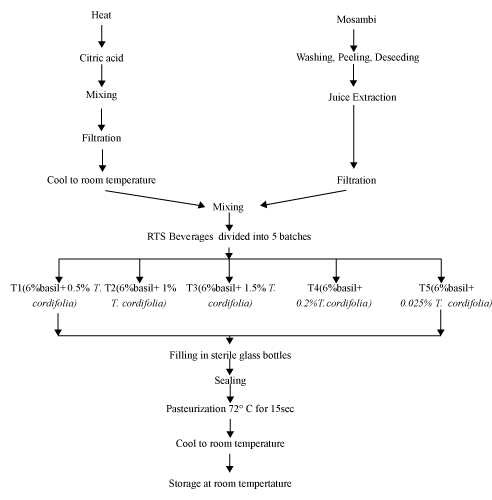
| Formulations and preparation of RTS: The RTS was prepared with the Food Product Order specification of Juice-10%, TSS- 15 °B, Acidity- 0.3%. The procedure for the preparation on RTS is given in figure 1. The prepared mosambi-medicinal herb mixed RTS was divided into 5 batches coded as T1, T2, T3, T4 and T5. Holy basil added to the juice was kept constant at 6% of the RTS while the T. cordifolia were varied from 0.5%, 1%, 1.5%, 2% and 2.5% respectively. The mixtures of herbs were added to the juice on replacement basis of the mosambi juice. The different combinations of RTS were prepared keeping the final volume of the juice constant in the RTS. Five different treatments coded as T1, T2, T3, T4 T5, were prepared using different combinations of T. cordifolia ranging from 0.5%-2.5% and were kept for the study (Table 1). The juices used for the preparation of RTS were centrifuged for settling the heavy particles. The final TSS of the beverage was kept constant at 15.24°B. The prepared juice was stored in glass bottles at room temperature for the period of 60 days. |
| Â |
|
|
Figure 1: Flowchart For Rts Preparation. |
|
| Â |
|
|
Table 1: Physico-chemical analysis of mousambi juice. |
|
| Â |
| Microbiological studies: The prepared beverage was studied for microbial load. The total microbial load was calculated by standard plate count method. The standard plate count was done according to the method described in “Recommendation method for the microbiological examination of food†[24]. |
| Â |
| Storage studies: RTS beverages were subjected to storage studies at room temperature for a period of 3 months by drawing samples at bimonthly intervals to evaluate changes in chemical and organoleptic parameters. The products were also evaluated for sensory qualities viz., colour, flavour, taste and overall acceptability by a panel of 10 judges using a 9-point Hedonic scale where, score 1 is for ‘dislike extremely’ and 9 for ‘like extremely’ [25]. Sensory scores were analysed statistically by ANOVA using SPSS to evaluate the significance at P< 0.05. |
| Â |
| Results and Discussion |
| Â |
| The formulation optimized on the basis of sensory evaluation (Table 2) was T3 formulation with 6%basil and 1.5% T.cordifolia. The changes in the optimized formulation (T3) upon storage of 60 days were summarized as below. |
| Â |
|
|
Table 2: Sensory score for the optimized RTS (P >0.5%). |
|
| Â |
| Physico-chemical parameters of processed mixed juices |
| Â |
| The Physico-chemical compositions of studied mosambi juice were presented in table 1 which reveals that the total soluble solid was 14.1, acidity 1.8%, total sugar 9.65%. |
| Â |
| Total soluble solids (TSS), pH and acidity |
| Â |
| The total soluble solids initially adjusted in formulations showed a negligible change throughout 2 months of storage period at room temperature (28-32°C). From the figure 2, it was observed that the initial TSS range was found to be 15.24 °Brix and during storage of two months the TSS range to 15.02 °Brix, which does not show any significant difference during storage and similar result was reported by [26] during storage of wood apple bar. Acidity was calculated on the basis of titrable acidity as citric acid. Acidity for the optimized formulation was calculated at an interval of 15 days during storage period of 60 days. The value of acidity observed at the interval of 15 days was given in figure 3. The initial acidity of optimized mixed fruit beverage was 0.4 % which was increased to 0.49% after storage for 60 days, similar result was reported by [27]. Increasing trends in acidity with increasing storage period have been observed earlier by Kalra and Revathi [28] and Sandhu et al. [29] as well which may be due to formation of various organic acids in the fruits such as sulphurous acid [30]. From the figures 2-5 it was indicated that vitamin C, T.S.S all were gradually decreased during while acidity increased during storage, all these three factor has strong correlation. Since vitamin C is soluble in water and oxidation sensitive which is gradually decreased and this is the main reason for lowering the value of acidity and T.S.S. [31]. The pH of the mixed beverage showed decrease in value during storage from 4.02 to 3.41 after 60 days of storage as the acidity of the beverage is increasing [32] (Figure 4). Trends of decreasing pH and increasing acidity found in these studies are well supported by previous researchers [29,33]. |
| Â |
|
|
Figure 2: Changes in total soluble solids during storage. |
|
| Â |
|
|
Figure 3: Changes in acidity during storage. |
|
| Â |
|
|
Figure 4: Changes in pH during storage. |
|
| Â |
|
|
Figure 5: Changes in Vitamin C content during storage. |
|
| Â |
| Vitamin-C and DPPH % radical activity |
| Â |
| Vitamin-C or ascorbic acid content of optimized beverage was observed to be high (Figure 5). The figure 5 showed that vitamin-C or ascorbic acid was reduced from 134mg/100g to 62.6 mg/100g in beverage after 60 days of storage due to the oxidation of vitamin C. This trend of decrease in vitamin C was found in storage studies of developed beverage and pickle too [34,35]. Antioxidant activity in terms of DPPH % radical scavenging activity was found to be 31.34, 49.63, 38.34 for mosambi juice, basil extract and tinospora extract respectively (Table 4). The antioxidant activity of optimized ready to serve beverages was found to be 24.56%, which decreased to 4.32% during 60 days of storage (Figure 6). |
| Â |
|
|
Figure 6: Changes in DPPH activity during storage. |
|
| Â |
|
|
Table 3: Microbiological analysis of optimized RTS (P >0.5%). |
|
| Â |
|
|
Table 4: DPPH % scavenging activity analysis of mousambi juice, basil extract and tinospora extract. |
|
| Â |
| Storage studies |
| Â |
| The optimized beverage was stored at ambient temperature (28-32°C). The colour, flavour, overall acceptability, TSS, acidity, pH and microbial load (Standard plate count) in the beverage were observed during the storage period of 2 months. The data of organoleptic quality attributes measured on 9-point hedonic scale are presented in table 2, it was evident from the data that flavour, texture, taste and overall acceptability was higher in formulation T3. It was also observed that with the decrease in storage period there was decrease in the rating of all organoleptic characters in beverage but the overall acceptability of the RTS beverage does not show significant difference during storage (p< 0.05%) (Figure 7) similar results were obtained by Jain, et al. [36]. In microbiological study, the total no. of viable count was not uniform. It also showed that the total colony count increased slightly with the increase of storage period. The initial microbial load of the beverage were found to be 2.53 (log cfu/g) which was not increased significantly after two months of storage. The microbial load was also very low and far below the safely level (Table 3). |
| Â |
|
|
Figure 7: Changes in sensory parameter during storage. |
|
| Â |
| Conclusion |
| Â |
| Herb mixed beverage having formulation 6%basil and 1.5% T.cordifolia was found to be optimum among the other formulations. The above optimized beverage can be stored effectively for two months. It is concluded that extracts of above herbs can be used as a valuable ingredient for the production of herbal beverage with all the important properties and medicinal characteristics of tinospora and basil herbs. This can thus prove to be a good health drink with phenolics and vitamin C as antioxidants. |
| Â |
| |
| References |
| Â |
- Madsen LM, Bertelsen G (1995) Spices as antioxidants. Trends Food Sci Technol 6: 271-277.
- Yeh CT, Yfen GC (2003) Effects of phenolic acids on human phenolsulfotransferase in relation to their antioxidant activity. J Agric Food Chem 51:1474-1479.
- Rao MV, Paliyath G, Ormrod DP (1996) Ultraviolet-band ozone induced biochemical changes in antioxidant enzymes of Arabidopsis thaliana. Plant Physiol 110: 125-136.
- Huang MT, Ho CT, Lee CY (1992) Phenolic Compounds in Food and Their Effects on Health: Volume II: Antioxidants and Cancer Prevention. American Chemical Society 13: 402.
- Cook NC, Samman S (1996) Flavanoids-Chemistry, Metabolism, cardioprotective effects and dietary sources. Nutrobiochem 7: 66-76.
- Caputo M, Sommella MG, Graziani G, Giordano I, Fogliano V, et al. (2004) Antioxidant profiles of Corbara small tomatoes during ripening and effects of aqueous extracts on J774 cell antioxidant enzymes. J Food Biochem 28: 1-20.
- Thatte U, Bagadey S, Dahanukar S (2000) Modulation of programmed cell death by medicinal plants. Molecular and cellular Biochemistry 46: 199-214.
- Chaudhary R, Jahan S, Goyal PK (2008) Chemopreventive potential of an Indian Medicinal Plant (Tinospora cordiffolia) on skin carcinogenesis in mice. J Environ Pathol Toxicol Onco 27: 233-243.
- Kapur P, Jarry H, Wuttke W, Pereira BMJ, Seidlova-Wuttke D (2008) Evaluation of the antiosteoporotic potential of Tinospora cordifolia in female rats. Maturitas 59: 329-338.
- Panchabhai TS, Ambharkhane SV, Joshi AS, Samant BD, Rege NN (2008) Protective effect of Tinospora cordifolia, Phyllantus emblica and their combination against antitubercular drugs induced hepatic damage: an experimental study. Phytother Res 22: 646-650.
- Bishayi B, Roychowdhury S, Ghosh S, Sengupta M (2002) Hepatoprotective and immunomodulatory properties of Tinospora cordifolia in CCl4intoxicated mature albino rats. The Journal of Toxicological Sciences 27:139-146.
- Umamaheshwari S, Mainzen PS, Prince (2007) Antihyperglycaemic effect of logen-Excel, an ayurvedic herbal formulation in steptozotocin-induced diabetes mellitus. Acta Pol Pharm 10: 1375-1386.
- Jagetia GC, Rao SK (2006) Evaluation of cytotoxic effects of dichloromethane extract of Guduchi (Tinospora cordifolia Miers ex Hook f & Thoms) on cultured HeLa Cells. Evidence-Based Complementary and Alternative Medicine 3: 267-272.
- Badar VA, Thawani VR, Wakode PT, Srivastava MP, Gharpure KJ, et al. (2005) Efficacy of Tinospora cordifolia in allergic rhinitis. J Ethnopharmacol 96: 445-449.
- Anilakumar KR (2010) In vitro antioxidant potency of Tinospora cordifolia (gulancha) in sequential extracts. Int J Pharm Biol Arch 1: 448-456.
- Leung AY, Foster S (1996) Encyclopedia of Common Natural Ingredients used in foods, drugs, and cosmetics. (2nd edn), John Wiley & Sons, USA.
- Saito Y, Asari T (1976) Studies on the antioxidant properties of spices. Total ocopherol content in spices. J Jpn Soc Food Nutr 29: 289-292.
- Kolesnikova I, Nilov G, Baranova S, Ermakov A, Pirog N (1976) New plant raw materials for production of soft drinks. Kharchova Promislovist 6: 43-44.
- Syed HM, Pawar SM, Jadhav BA, Salve RV (2011) Studies on preparation and qualities of sweet orange based products. Carpathian J Food Sci Technol 3: 32-42.
- Ranganna S (1986) Handbook of Analysis and Quality Control for Fruit and Vegetable Products. 2nd Edn., McGraw-Hill Publishing Co. Ltd., New Delhi Pages: 1112.
- Indian Pharmacopoeia (1996) Ministry of Health and Family Welfare. Vol.2, Govt. of India, Controller of Publication New Delhi, pp: 100-111.
- Alothman M, Bhat R, Karim AA (2009) Antioxidant capacity and phenolic content of selected tropical fruits from Malaysia, extracted with different solvents. Food Chem 115: 785-788.
- Murray JM, Delahunty CM, Baxter IA (2001) Descriptive Sensory Analysis: past, present; future. Food Res Int 34: 461-471.
- APHA (1967) Recommended Methods for the Microbiological Examinations of Food. American Public Health Association Inc New York 53-59.
- Amerine MA, Pangborn RM, Roessler EB (1965) Principles of Sensory Evaluation of Foods. (2nd edn), Academic Press, USA.
- Vidhya R, Narain A (20110 Development of preserved products using under exploited fruit, wood apple (Limonia acidissima). Am J Food Technol 6: 279-288.
- YadavRB,Yadav BS, Kalia N (2010) Development and storage studies on whey-based banana herbal (Mentha arvensis) beverage. Am J Food Technol 5: 121-129.
- Kalra SK, Revathi G (1981) Storage studies on guava pulp. Indian food packer 37: 29-33.
- Sandhu KS, Singh M, Ahluwalia P (2001) Studies on processing of guava into pulp and guava leather. J Food Sci Technol 38: 622-624.
- Baramanary AOP, Gupta, Dhawan SS (1995) Evaluation of guava hybrid for making nectar, Harayana. J Hortic sci 24: 102-109.
- Simsek M (2011) A Study on Selection and Identification of Table Fig Types in East Edge of Firat River. Asian Journal of Animal and Veterinary Advances 6: 265-273.
- Majumdar TK, Wadikar DD, Vasudish CR, Premavalli KS, Bawa AS (2011) Effect of Storage on Physico-Chemical, Microbiological and Sensory Quality of Bottlegourd-Basil Leaves Juice. American Journal of Food Technology 6: 226-234.
- Tandon DK, Kalra SK, Kulkarni JK, Chadha KL (1983) Chemical and microbial evaluation of stored guava pulp in PVC container. J Food Sci Technol 20: 118-120.
- Mishra V, Mishra P, Rai GK (2010) Process and Product standardization for the development of amla bar. Beverage and Food World 37: 58-60.
- Puranik V, Mishra V, Singh N, Rai GK (2011) Studies on development of protein rich germinated green gram pickle and its preservation by using class one preservative. Am J Food Technol 6: 742-752.
- Jain PK, Jain P, Nema PK (2011) Quality of Guava and Papaya Fruit Pulp as Influenced by Blending Ratio and Storage Period. American Journal of Food Technology 6: 507-512.
|
| Â |
| Â |